
Portable Classroom Cost Factors for Schools
Schools often need classroom space quickly because of renovations, enrollment growth, redistricting, or temporary swing-space needs. When that happens, one of the first questions is cost. Portable classrooms can be leased for short-term use or purchased as permanent modular school buildings, but total pricing depends on more than just the building itself.
This guide explains the main factors that affect portable classroom cost in 2026, including lease versus purchase, classroom size, site work, utility connections, campus system integration, and design complexity. If you are budgeting for a school expansion or temporary classroom solution, these are the variables that matter most.
6 Key Factors That Determine Portable Classroom Cost
Six key factors typically have the biggest impact on portable classroom cost:
- Lease or Purchase — Temporary rental or permanent ownership
- Size and Layout — From one classroom to larger multi-classroom configurations
- Site Prep and Utilities — Foundations, grading, and utility connections
- School System Integration — Fire alarm, security, HVAC, and IT tie-ins
- Design Complexity — Standard layouts versus campus-matched finishes and features
- Lease Term — Longer rental terms often reduce monthly cost
1. Lease vs. Purchase
For short-term needs, schools often lease modular classrooms with delivery, setup, and later removal built into the project scope. For long-term needs, purchasing a permanent modular classroom or school building may make more sense, especially when site integration and long-term occupancy are priorities.
Read or download our free Lease vs. Buy Guide to compare long-term cost considerations.
2. Size and Classroom Configuration
Portable classroom cost increases with square footage, classroom count, circulation space, restrooms, offices, and overall layout complexity. Standard classroom modules are often used as building blocks for larger school expansions.
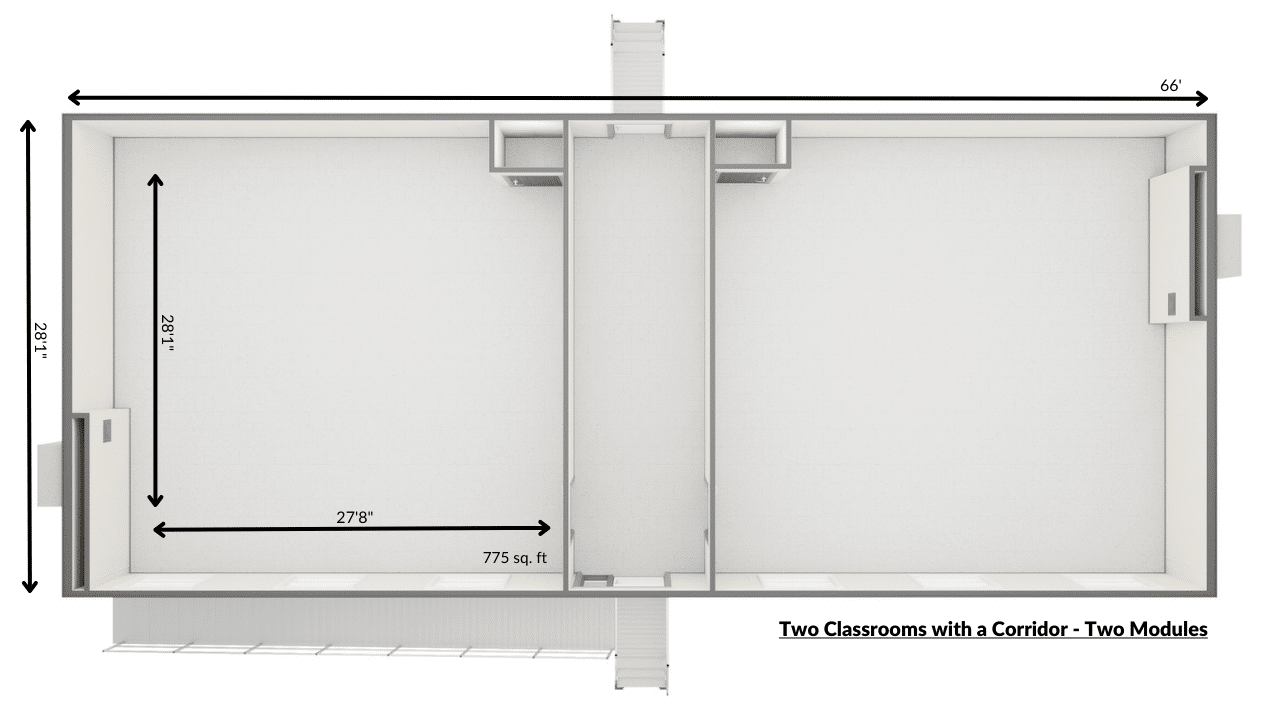
Two modules can create two classrooms with shared corridor space.
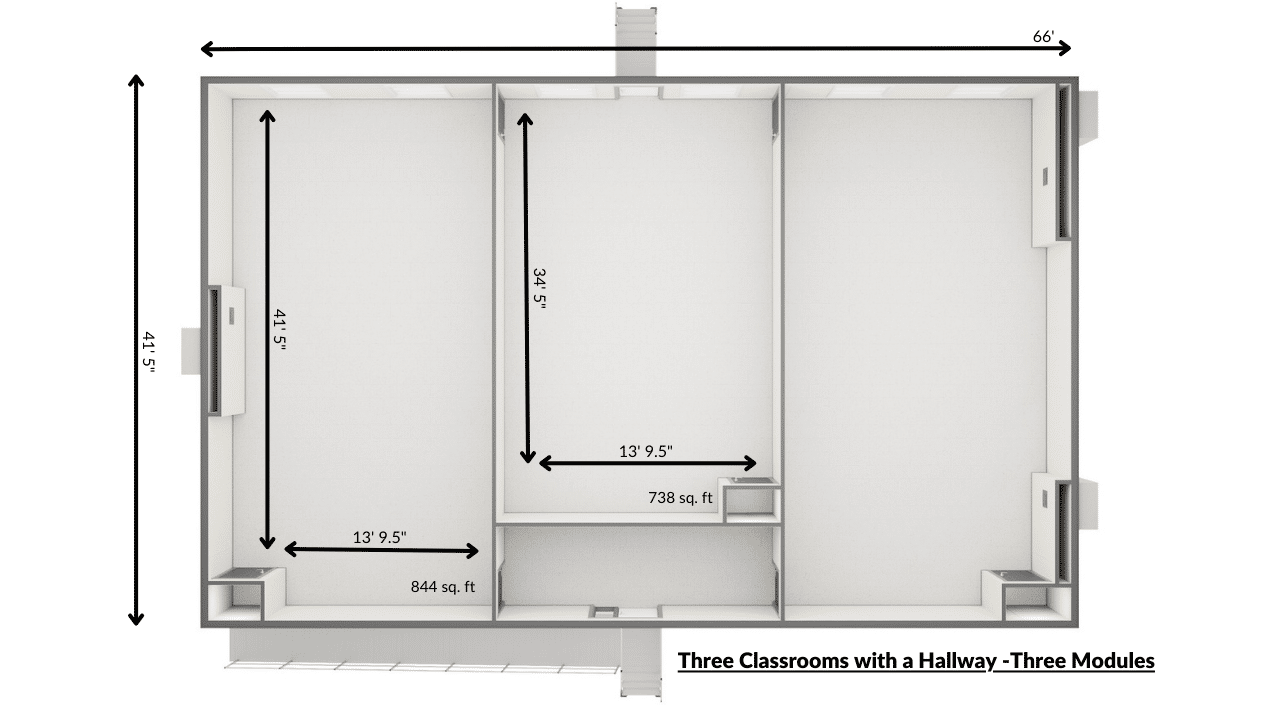
Additional modules can support multi-classroom layouts with restrooms, offices, and support spaces.
Larger footprints and custom configurations increase total project cost, but they can provide better long-term value when more students must be accommodated efficiently.
3. Site Preparation and Utility Connections
Site work can represent a significant share of the total portable classroom project cost. Full turnkey projects often include:
- Foundation: Precast blocks, grade beams, or helical piles depending on soil and site conditions
- Grading and paving: ADA ramps, walkways, curbs, and access improvements
- Utilities: Water, sewer, electric, data, and fire alarm connections
- Landscaping and campus tie-ins: Fencing, surface restoration, and site integration work
4. Integration with Existing School Systems
Portable classrooms often need to connect with existing campus systems, which can affect both cost and project scope.
- Security systems such as cameras and access controls
- Fire alarm and fire protection systems
- HVAC coordination and zoning
- IT and network infrastructure
Depending on the campus, existing infrastructure may need upgrades to support code compliance and daily school operations.
5. Design Complexity and Customization
Basic portable classroom designs are usually the fastest and most budget-friendly option. More customized buildings may include upgraded exteriors, sloped roofs, higher-end finishes, or design elements that better match the existing campus.
Additional features such as covered walkways, canopies, sinks, storage, or specialty classroom functions can increase both cost and schedule.
6. Lease Duration (For Rentals)
Longer lease terms often reduce the monthly rate. Schools planning summer delivery should also account for seasonal demand and reserve units early when possible.
Modular vs. Traditional Classroom Construction: Cost Comparison
Modular classroom construction is not always the lowest upfront option, but it is often one of the most predictable.
Traditional site-built projects can face weather delays, labor shortages, and change orders. Modular classroom projects shift much of the work into a controlled factory setting, which can help reduce schedule risk and improve cost certainty.
In many cases, modular classroom projects can be completed faster and with more predictable costs than traditional site-built construction.
Ready to Plan Your Portable Classroom Project?
Every school project is different. Request a quote based on your classroom count, timeline, site conditions, and compliance requirements.
Serving ME, VT, NH, MA, RI, CT, NY, NJ, PA, OH, MI